Digital Transformation: A Complete Guide

Introduction
The way businesses operate has changed dramatically over the past decade. Rapid technological advancements, evolving customer expectations, and increasing competition have made digital transformation a necessity rather than a choice. Organizations across industries are embracing digital technologies to streamline operations, improve customer experiences, and drive innovation.
Digital transformation goes beyond simply adopting new software or moving data to the cloud. It involves rethinking business processes, company culture, and customer engagement by leveraging modern technologies such as cloud computing, artificial intelligence (AI), automation, data analytics, and the Internet of Things (IoT).
Whether you're a startup aiming to scale or an established enterprise modernizing legacy systems, digital transformation provides the foundation for sustainable growth and long-term success.
This guide explores what digital transformation is, why it's important, its benefits, key technologies, implementation steps, challenges, and best practices to help your organization thrive in the digital age.
Transform Your Business with AI Development Services
As businesses embrace digital transformation, they need intelligent technologies that automate processes, improve decision-making, and enhance customer experiences. Our AI Development Services help businesses build custom AI solutions, intelligent automation systems, AI agents, machine learning models, and generative AI applications that streamline operations, optimize workflows, and support long-term digital growth.
What Is Digital Transformation?
Digital transformation is the process of integrating digital technologies into every aspect of a business to improve operations, enhance customer experiences, and create new value.
It often involves replacing manual or outdated processes with digital solutions that enable faster decision-making, better collaboration, and increased efficiency.
Examples of digital transformation include:
- Moving business applications to the cloud
- Developing customer-facing mobile applications
- Automating repetitive workflows
- Integrating business systems through APIs
- Using AI-powered chatbots for customer support
- Implementing data analytics dashboards
- Adopting enterprise resource planning (ERP) systems
Digital transformation is an ongoing journey that evolves as technology and business needs change.
Why Digital Transformation Matters
Customers today expect seamless digital experiences across websites, mobile apps, and customer support channels. Employees also need modern tools that help them work efficiently from anywhere.
Businesses that fail to embrace digital transformation often struggle with:
- Inefficient manual processes
- High operational costs
- Poor customer experiences
- Slow decision-making
- Limited scalability
- Difficulty adapting to market changes
Organizations that invest in digital transformation are better positioned to innovate, respond to customer needs, and remain competitive.
Key Benefits of Digital Transformation
1. Improved Operational Efficiency
Automation reduces repetitive manual tasks, allowing employees to focus on strategic initiatives. Digital workflows improve productivity while minimizing errors and delays.
Examples include:
- Automated invoice processing
- Workflow approvals
- Inventory management
- Employee onboarding
- Customer service automation
2. Enhanced Customer Experience
Modern customers expect personalized and convenient interactions.
Digital transformation enables businesses to:
- Deliver personalized recommendations
- Offer self-service portals
- Provide mobile applications
- Enable real-time customer support
- Improve order tracking
Satisfied customers are more likely to remain loyal and recommend your business to others.
3. Better Decision-Making
Data-driven decision-making is one of the greatest advantages of digital transformation.
Businesses can analyze:
- Customer behavior
- Sales performance
- Marketing campaigns
- Financial reports
- Operational metrics
Real-time analytics help leaders identify opportunities and respond quickly to changing conditions.
4. Increased Agility
Digital technologies make it easier to adapt to new business opportunities.
Organizations can:
- Launch products faster
- Respond to customer feedback quickly
- Scale operations efficiently
- Enter new markets with confidence
Agility has become a major competitive advantage in today's fast-changing economy.
5. Reduced Costs
Although digital transformation requires investment, it often reduces long-term costs through:
- Process automation
- Lower infrastructure expenses
- Reduced paperwork
- Improved resource utilization
- Better inventory management
Operational savings allow businesses to reinvest in innovation and growth.
6. Improved Collaboration
Cloud-based collaboration platforms enable employees to work together regardless of location.
Benefits include:
- Real-time document sharing
- Video conferencing
- Project management tools
- Centralized communication
- Secure remote access
This flexibility supports hybrid and remote work environments.
Technologies Driving Digital Transformation
Successful digital transformation relies on several core technologies.
Cloud Computing
Cloud platforms provide scalable infrastructure, improved collaboration, and reduced IT maintenance costs.
Artificial Intelligence (AI)
AI helps automate customer support, analyze business data, generate insights, and improve operational efficiency.
Internet of Things (IoT)
Connected devices collect real-time data for manufacturing, healthcare, logistics, and smart infrastructure.
Big Data Analytics
Analytics platforms convert large volumes of data into actionable business insights.
API Integration
APIs connect business applications, enabling seamless communication between systems and automated workflows.
Mobile Applications
Business mobile apps improve customer engagement while giving employees access to essential tools anytime, anywhere.
Develop Scalable Digital Platforms with Custom Web Application Development
As organizations modernize their operations, they need secure and scalable web applications that connect people, processes, and business data. Our Custom Web Application Development Services help businesses build tailored web platforms, customer portals, enterprise applications, and workflow management systems that improve collaboration, increase operational efficiency, and support successful digital transformation initiatives.
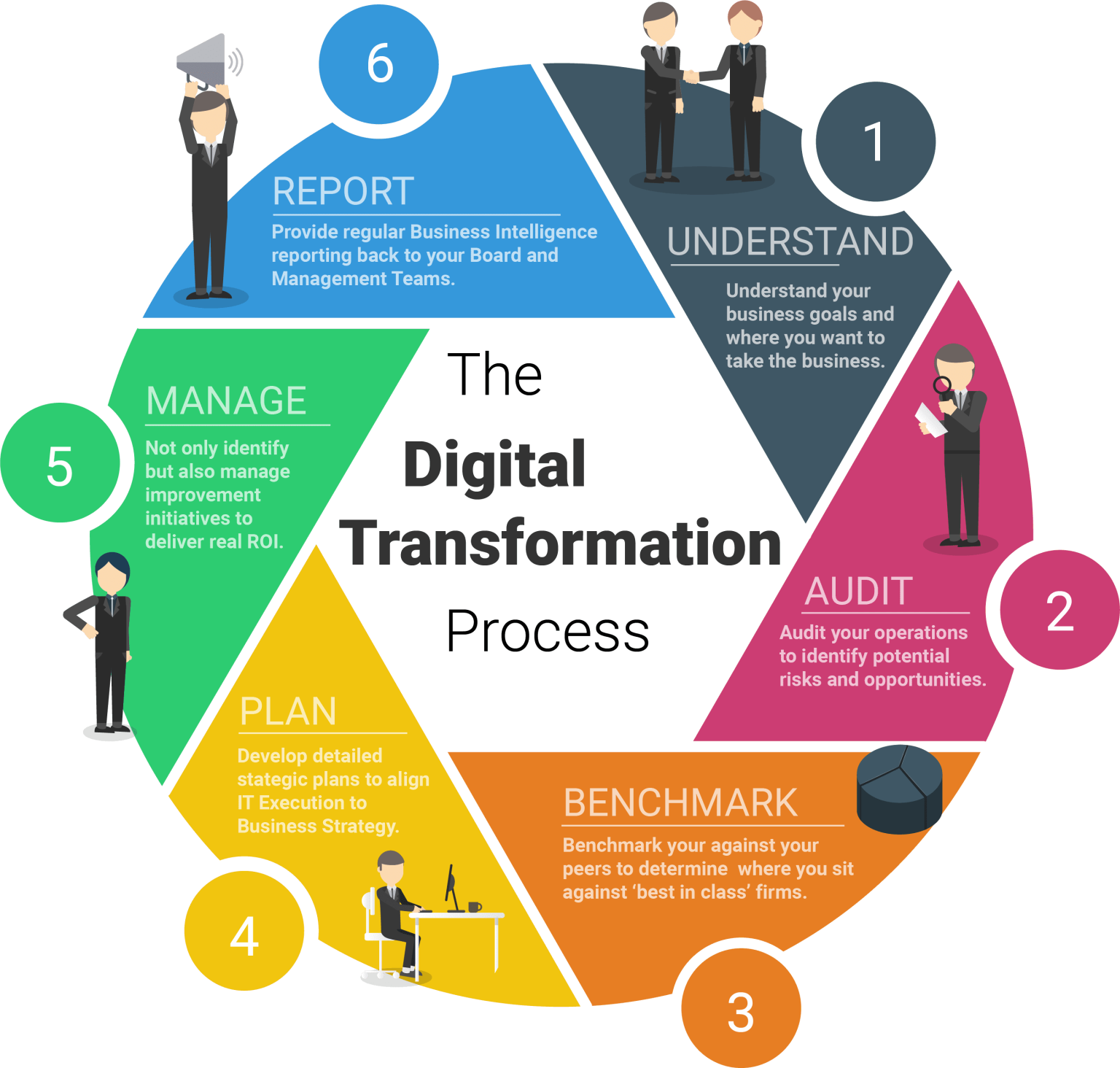
Steps to Implement Digital Transformation
A successful digital transformation strategy requires careful planning.
1. Assess Current Processes
Identify manual workflows, outdated systems, and operational inefficiencies.
2. Define Clear Objectives
Determine what you want to achieve, such as:
- Better customer experience
- Increased productivity
- Reduced operational costs
- Faster service delivery
3. Select the Right Technologies
Choose solutions that align with your business goals and future growth.
4. Train Employees
Successful transformation depends on employee adoption. Provide training and encourage a culture of continuous learning.
5. Implement Gradually
Rather than replacing every system at once, prioritize high-impact projects and expand over time.
6. Measure Results
Track key performance indicators (KPIs) such as productivity, customer satisfaction, operational costs, and revenue growth.
Common Challenges
Despite its advantages, digital transformation presents several challenges.
Resistance to Change
Employees may hesitate to adopt new technologies or workflows.
Legacy Systems
Older software may require modernization or integration with newer platforms.
Security Concerns
Businesses must protect sensitive information using cybersecurity best practices.
Budget Constraints
Digital transformation requires strategic investment and careful planning.
Skills Gap
Organizations may need additional expertise in cloud computing, AI, cybersecurity, and software development.
Planning ahead helps reduce these risks and improve project outcomes.
Best Practices for Successful Digital Transformation
Organizations can increase success by following these best practices:
- Develop a long-term digital strategy.
- Focus on customer needs.
- Invest in cybersecurity.
- Encourage innovation across teams.
- Use scalable cloud-based solutions.
- Integrate systems through APIs.
- Continuously monitor performance.
- Gather employee and customer feedback.
- Update technologies regularly.
- Partner with experienced technology providers.
How Professional Digital Transformation Services Can Help
Implementing digital transformation can be complex, especially for organizations managing multiple systems and legacy infrastructure.
Professional technology partners can help by providing:
- Digital transformation consulting
- Custom software development
- Mobile application development
- API integration services
- Cloud migration
- Business process automation
- AI and machine learning solutions
- Data analytics implementation
- Ongoing maintenance and support
Working with experienced professionals reduces implementation risks and accelerates digital transformation initiatives.
The Future of Digital Transformation
Emerging technologies continue to shape the future of business.
Key trends include:
- Generative AI applications
- Intelligent automation
- Hyperautomation
- Edge computing
- Low-code and no-code development
- Advanced cybersecurity solutions
- Predictive analytics
- Smart connected devices
Organizations that embrace these innovations will be better prepared to compete in an increasingly digital marketplace.
Conclusion
Digital transformation is no longer optional for businesses seeking long-term growth and competitiveness. By integrating modern technologies, automating processes, improving customer experiences, and making data-driven decisions, organizations can unlock new opportunities and build resilient operations.
Success requires more than adopting new tools—it involves creating a culture of innovation, investing in scalable technology, and continuously improving business processes. Whether you're modernizing existing systems or launching new digital initiatives, a well-planned digital transformation strategy can position your business for sustained success in the years ahead.
Frequently Asked Questions (FAQs)
1. What is digital transformation?
Digital transformation is the process of using digital technologies to improve business operations, customer experiences, and organizational efficiency.
2. Why is digital transformation important?
It helps businesses become more efficient, reduce costs, improve customer satisfaction, and adapt quickly to changing market demands.
3. Which technologies are essential for digital transformation?
Key technologies include cloud computing, AI, automation, API integration, data analytics, IoT, and mobile applications.
4. What are the biggest challenges of digital transformation?
Common challenges include resistance to change, legacy systems, cybersecurity concerns, budget limitations, and skills gaps.
5. How can businesses start their digital transformation journey?
Begin by assessing current processes, defining clear goals, choosing the right technologies, training employees, implementing solutions gradually, and continuously measuring performance.